
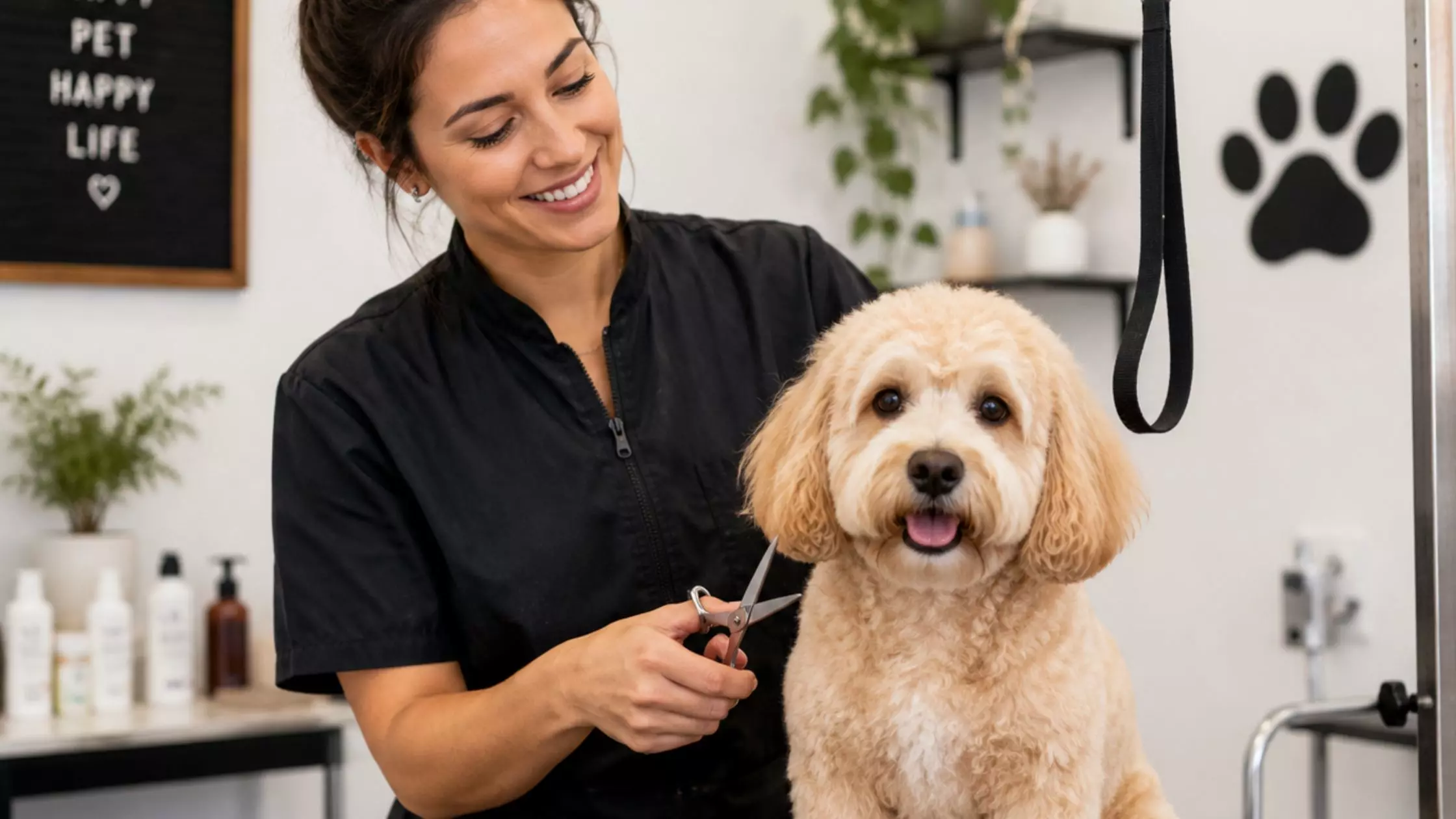

Many people want to work with animals, but they don’t know where to start or what skills actually matter. Pet grooming looks simple from the outside, yet it requires technical training, patience, and proper handling techniques. Without guidance, beginners often struggle or give up early. The good news is, with the right steps, becoming a professional pet groomer is realistic, stable, and can even grow into a full business.
What a Pet Groomer Actually Does
A pet groomer is responsible for maintaining the hygiene, appearance, and overall comfort of pets, mainly dogs and cats. But the job goes beyond just cutting hair.
A typical grooming session includes:
- Bathing and drying pets using pet-safe shampoos
- Brushing and detangling coats
- Nail trimming and ear cleaning
- Breed-specific haircuts
- Checking skin conditions or abnormalities
A skilled pet groomer also observes behavioral signals. Some pets get anxious or aggressive during grooming, so calm handling is part of the job. You’re not just working with tools—you’re managing trust between animals and humans.
In many modern setups like country pets grooming services, groomers also handle pickup, delivery, and client communication, making the job more customer-focused than ever.
Skills You Need to Become a Pet Groomer
Becoming a professional groomer isn’t just about liking animals. You need a mix of technical and soft skills.
1. Animal Handling Skills
You must understand how different breeds behave. A nervous dog and a calm cat require completely different approaches.
2. Coat and Skin Knowledge
Different coat types require different grooming techniques:
- Double coats need de-shedding tools
- Curly coats require mat removal
- Short coats need skin care attention
3. Tool Control
Clippers, scissors, brushes, and dryers all require precision. Poor handling can injure the pet.
4. Patience and Stress Control
Animals feel human energy. A stressed groomer often leads to a stressed pet.
5. Communication Skills
Clients expect updates, advice, and honest feedback about their pets’ condition.
Without these skills, even expensive training won’t help much in the long run.
Pet Grooming Training and Certification Options
Most professionals start with formal training. While some learn on the job, structured education gives faster results.
Pet Grooming School Cost Breakdown
Training cost depends on location, depth, and certification level.
| Training Type | Duration | Average Cost |
|---|---|---|
| Basic Grooming Course | 4–8 weeks | $500 – $2,000 |
| Professional Certification | 3–6 months | $2,000 – $6,000 |
| Advanced Breed Styling | 6–12 weeks | $1,000 – $3,500 |
Some students prefer short workshops before committing to full programs.
Online vs Physical Training
- Online: Flexible but less hands-on experience
- Physical school: Better skill development with live animals
For serious careers, physical training is the preferred route.
Essential Tools Every Pet Groomer Needs
A professional setup depends heavily on tools. Poor equipment slows you down and affects results.
Core Tools:
- Grooming scissors and clippers
- Dematting combs and brushes
- Nail trimmers
- Ear cleaning solution
- High-velocity dryers
Hygiene Setup:
- Disinfectants
- Towels and aprons
- Cleaning stations
Pet Grooming Tub Setup:
A proper pet grooming tub is essential for safe bathing. It helps control water flow and prevents slipping accidents.
Grooming Clothing:
Many professionals use specialized pet grooming clothes. These are waterproof, hair-resistant, and easier to clean after sessions.
Without proper tools, even skilled groomers struggle to maintain consistency.
Mobile Pet Grooming vs Salon Grooming
The industry has shifted heavily toward mobile services in recent years.
Salon Grooming
Traditional setup where clients bring pets to a fixed location.
Pros:
- Full equipment availability
- Controlled environment
- Higher client capacity
Cons:
- Travel required for customers
- Stress for pets during transport
Mobile Pet Grooming
This model brings services directly to the customer.
You’ll find setups like:
- Miami pet grooming mobile services
- mobile pet grooming in Murrieta CA
- mobile pet grooming Murrieta CA operations
- fancy paws pet grooming mobile units
These businesses often use vans or trailers equipped with full grooming stations.
Mobile Salon Trailer Business
Some professionals even invest in a mobile pet grooming salon trailer for sale, which allows them to scale quickly without renting a shop.
Pros:
- High convenience for clients
- Lower long-term rent cost
- Strong demand in suburban areas
Cons:
- High initial investment
- Maintenance costs for vehicle
Mobile grooming is currently one of the fastest-growing segments in the industry.
How to Start Your Pet Grooming Business
Once you gain skills, the next step is building a business.
Step 1: Licensing and Setup
Check local requirements for animal handling services and business registration.
Step 2: Choose Your Model
- Salon-based grooming
- Mobile grooming unit
- Home-based grooming setup
Step 3: Investment Planning
Your startup costs may include:
- Tools and equipment
- Transport or mobile van
- Marketing setup
- Training certification
Step 4: Pricing Strategy
Your pricing depends on:
- Breed size
- Coat condition
- Service type (basic or premium)
Step 5: Market Research
Use local demand analysis before launching. Areas with higher pet ownership usually generate faster growth.
Business Valuation Insight
Many owners use a pet grooming business valuation calculator to estimate revenue, expenses, and future growth before expansion or selling.
Common Mistakes New Pet Groomers Make
Beginners often struggle not because of lack of passion, but because of avoidable errors.
1. Skipping Training
Jumping directly into business without certification leads to inconsistent results.
2. Poor Pricing Strategy
Charging too low makes scaling impossible.
3. Wrong Tool Usage
Using the wrong blade or clipper setting can harm pets.
4. Ignoring Pet Behavior
Every animal reacts differently—forcing the process creates risks.
5. Lack of Hygiene Control
Cleanliness is non-negotiable in grooming environments.
Avoiding these mistakes significantly improves long-term success.
Career Growth and Income Potential
A pet groomer can grow in multiple directions.
Entry-Level Groomer
- Works in salons
- Learns under senior groomers
- Builds experience with basic breeds
Experienced Groomer
- Handles complex grooming styles
- Manages high-end clients
- Earns higher hourly rates
Business Owner
- Runs salon or mobile grooming service
- Employs staff
- Expands service area
Income varies widely depending on location and model. Mobile groomers often earn more due to convenience pricing and lower overhead.
Is Mobile Pet Grooming Worth It?
Yes, especially in urban and suburban regions where pet ownership is high and convenience matters.
Services like:
- doctor groomer mobile pet grooming
- EZ Groom pet cologne add-on services
show how businesses are expanding beyond basic grooming into premium pet care.
The key advantage is simple: customers prefer services that come to them.
FAQ Section
How long does it take to become a pet groomer?
Most people take 2–6 months depending on training intensity and practice hours.
Do I need certification?
Not always, but certification increases trust and helps you get better jobs or clients.
Is mobile pet grooming profitable?
Yes, especially in high-density residential areas with strong pet ownership.
What tools are required for beginners?
Basic clippers, scissors, brushes, nail trimmers, and a grooming tub setup.
What is the cost of pet grooming school?
Anywhere from $500 to $6,000 depending on course level and duration.
Final Thoughts
Becoming a pet groomer is not just a job—it’s a skill-based career that can grow into a full business. Whether you choose salon work or mobile grooming, success comes from training, consistency, and understanding animal behavior.